
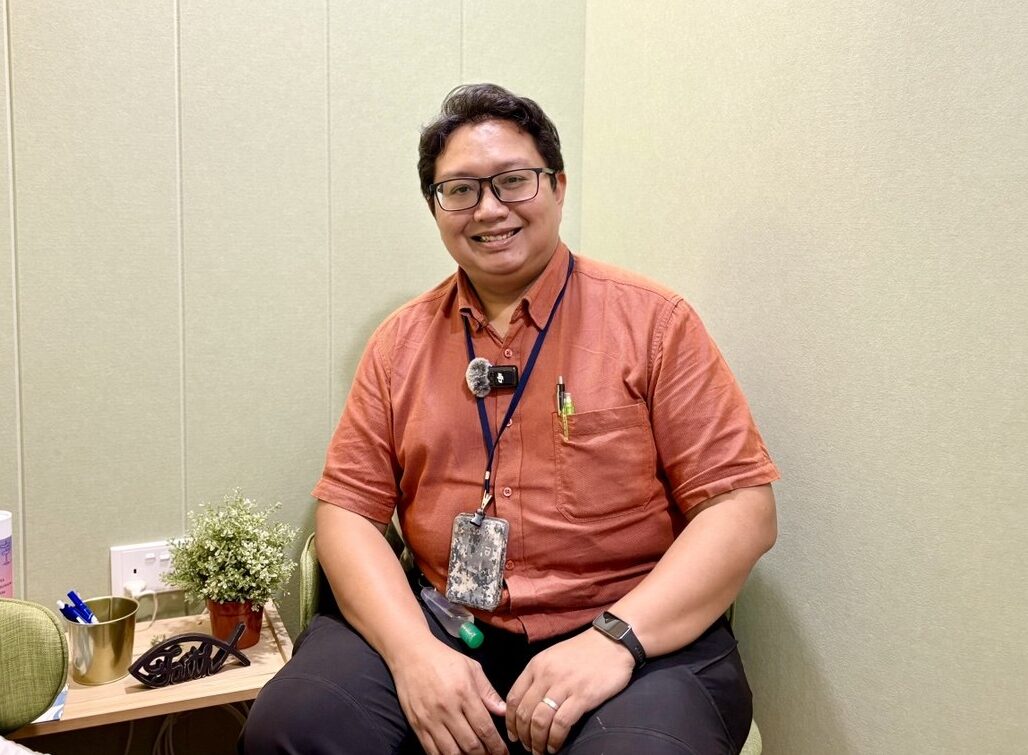
Alamin, 37, works in family services, supporting individuals through counselling and casework. Having recently completed a Master’s in Counselling, his journey into the helping profession spans working with children, youth, and adults. Having grown up with a father in the mental health field, and now seeing his own son step into a peer support role in school, Alamin reflects on how support and care for others have been a consistent thread throughout his life.
What led you to seek counselling?
Alamin:
I first came for counselling as part of my Master’s course requirement, where we have to fulfil personal therapy hours, and that was how I was introduced to EMCC.
However, after going through a few sessions, I began to see that it was more than just something to complete. As a counsellor myself, I realised the importance of working through my own issues, because I cannot carry my baggage into sessions and transfer it to my clients.
At the same time, my supervisor would point out certain patterns or areas that might be affecting me, encouraging me to bring these up with my therapist. Through this process, I started to recognise that there were things I had not been aware of before, and it became something I wanted to explore more intentionally.
What were some of the issues you were working through?
Alamin:
One of the main areas was the emotional toll of my work. I handle many cases, and when you empathise deeply with clients, it can become quite heavy over time.
For instance, there was a case where a client shared about losing their child, and their child’s death anniversary happened to fall on my wedding date. Because of that, it affected me more than I expected, especially when it made me think about my own children and family.
Beyond that, I began to notice patterns in my own life that I had not recognised before. What I thought were just “ruts” turned out to be blind spots. For example, I had a tendency to go with the flow and not rock the boat, but when explored further, this behaviour was possibly a form of avoidance.
In a similar way, I realised I relied a lot on adrenaline, doing things last minute and pushing myself to complete tasks under pressure. Although I could function like that, I came to understand that it was a problem that had been disguised as something normal.
On top of that, with the volume and complexity of the cases I handle, burnout also became something very real that I needed to address.
How did counselling help you?
Alamin:
Counselling helped me become more aware, especially of patterns and blind spots that I did not notice before. When I took the time to sit down and explore things more deeply, I started to see that there was more beneath the surface.
In addition, I learnt the importance of opening up. When you are more open, the process becomes easier because you are no longer holding things back, and the work goes beyond surface-level sharing.
To me, it is like putting down your baggage. Instead of carrying it all the time, you can finally set it down, look at what is inside, and begin unpacking it properly.
As a result, it also influenced how I function in daily life. For example, instead of relying on last-minute pressure, I became more intentional to not fall into my old habits and took extra steps to plan my tasks.
More importantly, it changed how I see myself as a counsellor. If I cannot trust someone else with my own issues, then it becomes difficult to expect my clients to trust me. Through this, I gained a deeper appreciation of the importance of trust and the therapeutic relationship.
How does your work influence how you view counselling?
Alamin:
Through my work, I see very clearly how unresolved issues, especially from childhood, can carry into adulthood. Trauma, family dynamics, and early experiences do not simply go away, and if they are not addressed, they tend to show up later in different ways.
This perspective is something that has been present in my life for a long time. Growing up, my father worked in the mental health field, so there was always that exposure and curiosity about people and their experiences.
Now, I also see this continuing into the next generation. My own son is a peer support leader in school, helping his friends, and it reminds me that support plays an important role at every stage of life.
Working with clients also allows me to see the unseen weight that people carry, such as shame, guilt, and the struggles behind their situations. Regardless of the issue, these emotions are very real.
Because of this, I believe counselling is important, as people may recognise that they have a problem but not know how to address it. Yet with the right support, they have more tools to help them process and move forward more meaningfully.
Has counselling changed how you see your own journey?
 Alamin:
It helped me realise that growth comes from facing things, rather than avoiding them.
Even when things are difficult, such as burnout or emotional struggles, it becomes a question of whether you want to remain where you are or take steps to move forward.
Although the process can be challenging, what matters is the journey of getting back up and continuing on.
What would you say to someone considering counselling?
Alamin:
My belief is that hope is believing when others have given up. And for me, that hope comes from being willing to take the first step, even when things feel difficult.
Sometimes, we may feel stuck or unsure, but it helps to ask whether we have explored all our options, and whether we have reached out for proper support. Talking to friends or family can be helpful, but counselling offers a more neutral and safe space to unpack what you are going through.
In the end, it comes down to whether you are ready to take that step. It is about deciding if you want to continue carrying your baggage, or if you are ready to put it down and begin looking at it more closely.
Counselling can support you in that process, but it also depends on your willingness to open up and engage. It is not about forcing change, but about being ready to explore things at your own pace.
So if you are unsure, you can start by trying. Sit down, talk it out, and give yourself the space to rest and process.
Alamin’s journey reflects an important truth, that even those in the helping profession need support. His experience shows that counselling is not just about addressing challenges, but about developing awareness, building trust, and learning to work through what we carry.
Through EMCC’s counselling services, individuals are given a safe and supportive space to explore their experiences, gain clarity, and take steps towards healing and growth. If you need support, we’re here to journey with you. Reach out here.
If you are a helping professional, we also offer subsidised counselling sessions under our Care-to-Care programme.