
Introduction

Grief is often described as an overwhelming sadness, but psychology shows it to be a complex and multi-layered response to losing someone or something significant. The psychology of grief encompasses not just emotional sorrow but also physical, cognitive, and behavioural changes that shape how people manage their daily lives. It influences how individuals think, feel, and relate to others, often altering routines and perspectives in unexpected ways.
Experiences of grief can differ depending on culture, personality, personal history, and the nature of the loss. These variations make grief both universal and deeply personal, shaped by how each person connects with what or whom they have lost. For some, grief might manifest as quiet withdrawal, while for others, it may be expressed through restlessness or even outbursts of anger. These variations reflect the emotional stages of loss, where people move through shifting feelings as they adapt to a new reality. The impact of bereavement extends beyond emotions, affecting relationships, concentration, and overall well-being.
Understanding grief through a psychological lens helps individuals, families, and communities to recognise its many forms and respond with greater empathy and support. Appreciating the intricate connection between mind and heart during loss opens the door to compassion and healing.
This article explores the depth of the psychology of grief, moving beyond sadness to examine its physical impact, its influence on thought and behaviour, and the coping processes that guide people toward acceptance and recovery.
Key Takeaways
- Grief is a deeply personal experience that touches emotions, thoughts, behaviour, and even physical health, revealing that it is far more complex than simple sadness.
- The grieving process does not follow a fixed timeline and/or set pattern; people move through their emotions in ways shaped by personality, culture, and circumstance.
- Coping and healing involve balancing pain with restoration, seeking support, and finding new meaning and purpose that enables life to move forward with renewed hope and resilience.
- Professional guidance offers understanding, structure, and a safe space for processing loss, supporting individuals as they rebuild emotional strength and stability.
Part 2: Unpacking the Psychology of Grief

2.1. Grief as a Multifaceted Emotional Experience
The psychology of grief reveals that it is rarely a single emotion. It involves a mix of emotions such as anger, guilt, anxiety, relief, and even numbness, which can coexist with sadness in complex and sometimes contradictory ways. These emotions often shift and overlap, suggesting that grief involves as much confusion and adjustment as it does sorrow.
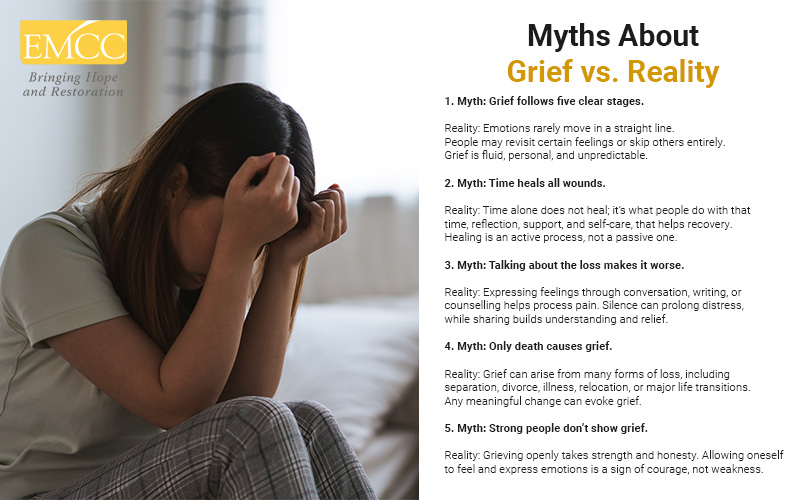
Psychological theories, including Elisabeth Kübler-Ross’s stages of grief, illustrate that the movement between denial, anger, bargaining, depression, and acceptance is not always linear. Later developments in psychology expand on this framework by adding stages such as shock, which may occur when loss is sudden, and testing, which describes the period when a person begins to explore new routines or coping methods before reaching acceptance.
Research highlights that people may move back and forth between emotions or even experience several at once. This fluidity reflects how the psychology of grief varies across individuals, shaped by personal history, culture, and environment. Cultural background also influences which emotions are viewed as acceptable expressions of grief, shaping how individuals outwardly process pain and move toward healing.
2.2. The Physical and Cognitive Dimensions of Grief
The psychology of grief extends beyond emotional pain to encompass a range of physical reactions. Common bodily responses include fatigue, disrupted sleep, changes in appetite, and lowered immunity, reflecting how emotional strain can affect overall health. For some individuals, the physical sensations of grief can feel as tangible as illness, underscoring the close connection between mind and body.
On a cognitive level, grief can cloud mental clarity. People may experience lapses in memory, difficulty concentrating, intrusive thoughts, or a general sense of mental fog. Everyday decisions can feel overwhelming as the mind becomes preoccupied with processing the absence of a loved one or a profound change in life circumstances. These experiences illustrate the psychological effects of loss, showing how grief can shape thought patterns, attention, and perception. Neuroscientific research further supports this understanding, indicating that grief activates the brain’s stress-response and reward systems, intensifying feelings of exhaustion and longing.
These physical and cognitive reactions are part of the body’s natural adaptation process. They reflect the mind’s effort to make sense of loss and the body’s gradual adjustment to a new reality. Recognising these symptoms as part of the psychology of grief helps individuals normalise their experiences and take steps toward recovery with patience and care.
2.3. Behavioural and Social Responses to Grief
Grief is also expressed through behaviour. Some individuals may withdraw and seek solitude to process their feelings, while others immerse themselves in work, exercise, or social activities to regain a sense of control. The psychology of grief explains that these responses are natural attempts to manage emotional pain and regain a sense of stability after loss. Others find comfort in familiar rituals such as lighting candles, visiting graves, or keeping cherished belongings as reminders of connection. These behaviours are reflected in the continuing-bonds theory, which suggests that maintaining a symbolic relationship with the deceased can be a healthy part of healing.
The psychology of grief also recognises that these behaviours can fluctuate. A person may alternate between seeking closeness and needing distance, or between social connection and isolation. Relationships can be affected during this time; some may grow stronger through shared mourning, while others may experience tension when coping styles differ. In situations involving the end of a relationship or family breakdown, separation and divorce counselling can help individuals work through emotional pain, manage difficult changes, and rebuild a sense of balance and security.
In some cases, grief can lead to maladaptive behaviours such as substance misuse, prolonged avoidance, or risky decision-making. These patterns may indicate that an individual is struggling to cope and could benefit from professional guidance. Seeking individual counselling in Singapore provides the support needed to address these challenges in a safe and confidential setting. Understanding the behavioural side of grief reminds us that healing is not only an internal process but also reflected in how people engage with the world around them.
Part 3: Coping, Growth, and the Psychology of Grief
3.1. Resilience and Adaptive Coping Mechanisms
Coping with grief requires a delicate balance between confronting the pain of loss and finding ways to maintain daily responsibilities. In the psychology of grief, this balance is captured in the dual-process model, which suggests that healthy adjustment involves alternating between facing grief directly and engaging in restorative activities that promote normalcy. Both are essential for healing as they provide space for emotional expression and support gradual reintegration into everyday life.
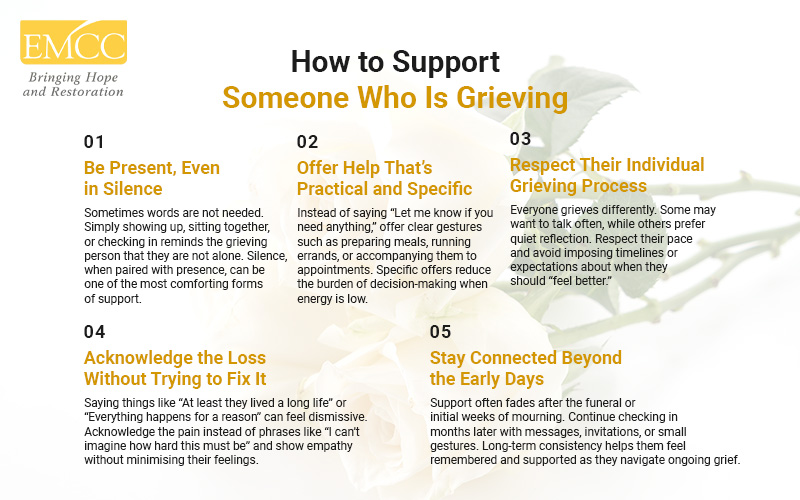
Adaptive coping strategies for grief often include reaching out for social support, practising mindfulness, maintaining self-care routines, and expressing emotions creatively through writing, art, or conversation. Such methods provide emotional release and help individuals process complex feelings in constructive ways. Physical activity, spending time in nature, or even maintaining certain rituals can also bring structure and comfort when life feels uncertain.
Counselling for grief in Singapore and support groups are particularly valuable resources, offering safe, non-judgmental environments where people can share experiences and receive validation from others who understand similar pain. Professional guidance offers steady support, helping individuals identify unhelpful coping habits and develop healthier approaches to manage grief.
The psychology of grief reminds us that coping does not mean forgetting the person or experience that was lost. Rather, it involves learning how to live with grief in a way that feels manageable and meaningful. Over time, this may include cherishing fond memories, honouring anniversaries, or finding small ways to keep connections alive—acts that help integrate loss into one’s ongoing life story.
3.2. Meaning-Making and Post-Traumatic Growth
For many individuals, grief eventually becomes a source of introspection and transformation. While the pain never disappears entirely, it can lead to profound reflection about what truly matters. This process often involves re-evaluation of one’s priorities, relationships, and goals. Through this reflection, individuals may rediscover a renewed sense of clarity and purpose. The psychology of grief explains this transformation as a shift from loss to meaning-making, rather than simply moving on.
Psychological theories suggest that people cope more effectively when they can integrate loss into a coherent life narrative. Finding meaning helps individuals move from asking “Why did this happen?” to, “What can I learn or take forward from this experience?” It allows pain to exist within a larger understanding of personal growth and life continuity.
Spiritual beliefs, cultural traditions, and personal philosophies often serve as guiding frameworks for meaning-making. Whether through prayer, rituals, meditation, or reflection, these practices help individuals feel connected to something greater than themselves, offering both comfort and perspective during the mourning process. Understanding the psychology of grief highlights how meaning-making becomes a vital step towards emotional growth and renewed resilience.
Not everyone will experience what psychologists call post-traumatic growth, but for some, grief can open unexpected pathways toward resilience and empathy. They may develop deeper compassion for others, greater emotional strength, or a renewed motivation to live purposefully. While grief is undeniably painful, the psychology of grief reveals that it can also be a transformative journey of healing, understanding, and self-discovery.
3.3. Questions You Might Have
1. Is it normal to feel emotions other than sadness when grieving?
Yes. Grief is rarely just sadness. Feelings such as anger, guilt, shame, relief, confusion, or even moments of unexplained calm are all common. These shifts are part of how the mind processes loss and reflect the complexity of human emotions. Recognising this range of emotions is a crucial part of understanding the psychology of grief, as it helps people see that there is no single “right” way to grieve.
2. How long does grief usually last?
Grief does not follow a fixed timeline or predictable pattern. For some, the sharpness of loss may begin to fade within a few months, while others may take years to regain emotional balance. The psychology of grief helps explain why this process varies so widely, showing how relationship closeness, coping styles, and social support influence healing. Even when people feel they have made progress, certain memories, dates, or experiences can bring feelings of sadness back to the surface. This is natural; it simply reflects enduring love and connection, not regression.
3. Can grief affect my physical health?
Yes. Grief can manifest physically through fatigue, disrupted sleep, appetite changes, or lowered immunity. Emotional stress can also influence blood pressure, digestion, and overall well-being. These effects arise because the body and mind are interlinked. Being aware of these changes is important so that individuals can take steps to prioritise both physical health and emotional needs.
4. When should I seek professional support?
It may be time to reach out if grief feels unmanageable, lasts for an extended period, or interferes significantly with daily responsibilities and relationships. Professional guidance can provide coping tools, emotional validation, and a safe environment to express difficult feelings. Seeking help is not about removing grief but about learning ways to live with it more comfortably. For prolonged sadness or loss of motivation, therapy for depression in Singapore may be appropriate, offering specialised care to restore emotional balance.
5. Does seeking counselling mean I am not coping well?
No. Seeking counselling is an act of strength and self-awareness. It reflects courage and a willingness to understand one’s emotions more deeply and take proactive steps towards healing. Counselling offers perspective, practical coping techniques, and a compassionate space to talk through painful thoughts that might feel too heavy to carry alone. For those in Singapore, connecting with a trusted counselling centre in Singapore, such as Eagles Mediation & Counselling Centre (EMCC), can be a meaningful step toward healing. Through one-on-one sessions or group support, professional guidance helps individuals rebuild emotional stability and rediscover hope. The goal of therapy is not to erase grief, but to help people carry it with greater ease and meaning.
Conclusion
The psychology of grief shows that loss is not defined by sadness alone. It involves a complex interplay of emotions, physical responses, cognitive changes, and shifts in social behaviour. Understanding this full picture helps individuals recognise that grief is neither a weakness nor a temporary state, but a profound human experience that requires patience, care, and empathy.
Recognising the depth of grief encourages more compassionate and thoughtful responses within families, friendships, and workplaces. When people understand the psychology of grief and learn to listen without judgment, they help foster a community where healing feels possible. Grief is not something that can be “fixed,” but it can be lived through, with both sorrow and growth having their rightful place.
Professional support can make a meaningful difference in this process. Counselling and mediation services, such as those offered by Eagles Mediation & Counselling Centre (EMCC), provide guidance tailored to each person’s emotional landscape. These services offer a safe, supportive environment for healing and help individuals understand their emotions while rebuilding stability at their own pace.
If you or someone you know is struggling after a loss, contact EMCC today. Learning about the psychology of grief can help you begin to heal and rediscover hope.