
Introduction
Social anxiety is often described in simple terms, yet the experience itself can feel complex and difficult to explain. It is not always about fear in obvious situations or struggling to speak in front of others. For many people, it shows up in quieter ways, such as overthinking conversations long after they have ended, feeling tense before routine interactions, or being unable to fully relax even when everything appears to have gone well.
This guide looks at how social anxiety develops across thoughts, physical reactions, and behavioural patterns. It explains why your mind may replay interactions, why your body reacts even when you know you are safe, and why switching off can feel harder than expected. It also explores how these patterns can gradually influence confidence, relationships, and daily life.
Understanding how social anxiety works makes it easier to recognise what you are experiencing and why it happens. This awareness is an important step towards responding to anxiety in a steadier and more manageable way.
Key Takeaways:
- Why does social anxiety appear even when nothing clearly went wrong?
Social anxiety can appear as quiet tension before or after interactions, even when there is no obvious conflict or negative outcome.
- Why does social anxiety make me replay conversations in my head?
It can cause the mind to focus on small details, perceived mistakes, or possible judgment, making ordinary conversations feel more significant than they are.
- Why does social anxiety affect my body even when I know I am safe?
Physical reactions such as a racing heart, shaky hands, or changes in breathing can happen when the body’s threat response is activated, even without real danger.
- Why does avoiding situations feel easier when social anxiety is present?
Avoidance can reduce discomfort in the short term, but it may reinforce the belief that certain situations are difficult or unsafe.
- When should I consider speaking to someone about social anxiety?
Support may be helpful when social anxiety affects daily life, relationships, work, sleep, or the ability to manage thoughts and physical responses.
When Anxiety Shows Up in Social Situations, Even Without a Clear Reason
Social anxiety does not always come with a clear trigger. Many people notice a subtle shift in how they feel before or after interactions, even when nothing objectively stressful has happened. This can manifest as a sense of being on edge before meeting someone, or as a lingering discomfort after a conversation ends.
In some cases, the anxiety is quiet rather than intense. It may not involve panic or visible distress, but instead feels like a constant background tension. A person might describe it as something being “off” without being able to explain why. This subtle form of anxiety is often overlooked, yet it can still affect how someone experiences social situations.
The lack of a clear reason can make it more confusing. When there is no obvious conflict or negative outcome, it becomes harder to understand why the discomfort is there at all. This uncertainty can lead to further questioning and self-doubt, reinforcing the cycle of anxiety.
Why Your Mind Keeps Overthinking Social Interactions
Why Do I Keep Thinking About What Others Think of Me After Every Interaction
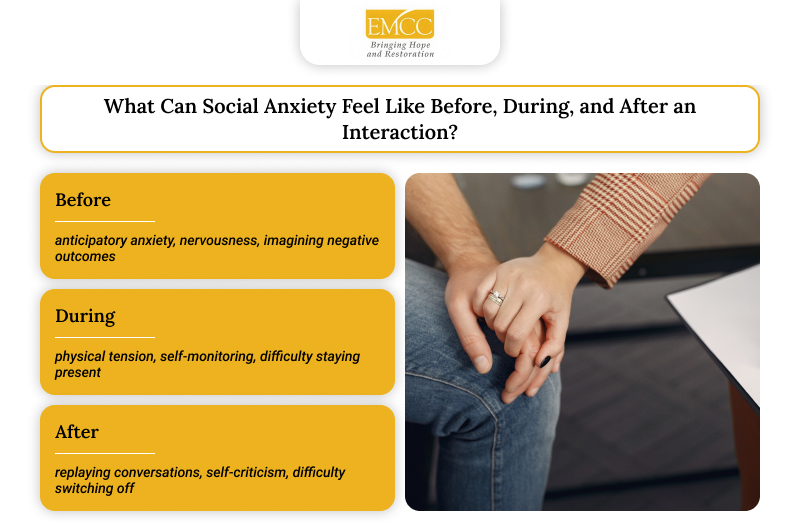
After a conversation ends, it is common for the mind to replay what was said. For someone experiencing social anxiety, this replay can become detailed and persistent. Small moments, such as pauses in speech or changes in tone, may be analysed repeatedly.
This pattern is often driven by a fear of judgment. The mind attempts to evaluate how others might have perceived the interaction, searching for signs of disapproval or misunderstanding. Even neutral expressions can be interpreted negatively when viewed through this lens.
Over time, this habit creates a loop in which each interaction becomes something to review rather than simply an experience. Instead of moving on, the mind remains focused on what might have gone wrong, even when there is no evidence that anything did.
Why Do I Replay Conversations and Assume I Said Something Wrong
A common feature of social anxiety is negative bias. This means the mind naturally focuses more on perceived mistakes than on neutral or positive aspects of an interaction. A single awkward moment can overshadow an otherwise normal conversation.
Self-criticism often reinforces this pattern. Thoughts such as “I shouldn’t have said that” or “I sounded awkward” become automatic responses. These thoughts can feel convincing, even when they are not grounded in reality.
The repetition of these thoughts strengthens the belief that something went wrong. Over time, this can affect how future interactions are approached, making the person more cautious or hesitant.
Why Small Social Moments Can Feel Bigger Than They Are
In social anxiety, internal amplification plays a significant role. This means that small events are mentally magnified, giving them more importance than they objectively hold. A brief silence, for example, might be interpreted as discomfort or disapproval.
This amplification is not intentional. It is the result of the mind trying to protect against potential social rejection. By focusing on small details, it attempts to identify and correct perceived mistakes.
However, this process can make everyday interactions feel more intense. Situations that others might move past quickly can linger and take on greater emotional weight, contributing to ongoing anxiety.
Why You Feel Anxious Even Before or During Social Situations
Why Do I Feel Nervous Before Speaking or Being Around People?
Anticipatory anxiety often occurs before a social interaction begins. The mind starts to imagine possible outcomes, many of which are negative or uncomfortable. This can lead to feelings similar to stage fright, even in casual settings.
The anticipation itself becomes stressful. Instead of focusing on the present moment, attention shifts to what might happen. This can make even routine interactions feel significant and challenging.
Over time, the expectation of anxiety can become part of the experience. The body and mind begin to associate social situations with discomfort, making the reaction feel automatic.
Why Does My Body React Even When I Know I’m Safe?
Social anxiety is not only a mental experience. The body also responds through the fight-or-flight system, which is designed to protect against danger. In social situations, this system can activate even in the absence of a real threat.
This response may include increased heart rate, muscle tension, or a sense of restlessness. These reactions are physical, and they can occur even when the person logically understands that they are safe.
The disconnect between what the mind knows and what the body feels can be frustrating. It often leads to questions about why the reaction is happening at all, which can further increase anxiety.
When Anxiety Becomes Physical, Not Just Mental
Why Does My Heart Race, Hands Shake, or Breathing Change Suddenly?
Physical symptoms of anxiety can appear quickly and without warning. A racing heart, trembling hands, or changes in breathing are common responses when the body perceives a threat.
These symptoms are part of the body’s natural response system. They are designed to prepare for action, even though in social situations there is no actual danger to respond to.
When these symptoms occur, they can become the focus of attention. This can create a feedback loop where noticing the symptoms increases anxiety, which in turn intensifies the physical response.
Why Do Some Situations Make Me Feel Like I Need to Leave Immediately?
In more intense situations, the body may trigger a panic response. This can create a strong urge to leave the environment quickly, even without a clear reason.
This reaction is linked to the same fight-or-flight system, but it feels more urgent. The individual may feel trapped or overwhelmed, leading to a desire to escape the situation.
For some, repeated experiences like this can lead to patterns associated with agoraphobia, where certain environments are avoided due to the fear of experiencing these symptoms again.
Why Avoiding Situations Starts to Feel Like the Easier Option
Why Do I Start Avoiding Social Situations Without Realising It?
Avoidance often develops gradually. A person might begin by declining certain invitations or limiting interactions that feel uncomfortable. Over time, this can become a pattern without being fully recognised.
This behaviour is understandable. Avoiding a situation reduces immediate anxiety, creating a sense of relief. This relief reinforces the behaviour, making it more likely to happen again.
The challenge is that avoidance prevents opportunities to build confidence. Without exposure to social situations, the anxiety remains unchallenged and can become more entrenched.
Why Does Avoidance Make Anxiety Feel Worse Over Time?
Avoidance works in the short term but has long-term effects. Each time a situation is avoided, the mind learns that the situation is something to be feared. This reinforces the association between social interaction and anxiety.
As a result, the range of situations that feel manageable may become smaller. What was once mildly uncomfortable can start to feel overwhelming, simply because it has not been faced.
This process is known as behavioural reinforcement. The more avoidance is used as a coping strategy, the more anxiety can grow over time.
Why You Can’t Seem to Switch Off, Even After It’s Over
Why Do My Thoughts Get Worse at Night After Social Interactions?
Many people notice that their thoughts become more active at night. After a day of interactions, the mind has more space to reflect, and this can lead to increased rumination.
In the absence of distractions, the brain revisits earlier conversations. The same patterns of over analysis and self-criticism come roaring back. In the stillness of night, the inner-critic often becomes the loudest.
Fatigue can also play a role. When the mind is tired, it may be less able to challenge such negative thoughts, making them feel ever more convincing.
Why Can’t I Relax Even When Everything Is Over?
Even after a social situation has ended, the body may remain in a heightened state. This lingering anxiety can make it difficult to relax or fully switch off.
The nervous system does not always return to baseline immediately. It can take time for the body to settle, especially if the interaction felt stressful.
During this period, the mind may continue to replay events or anticipate future situations. This combination of physical and mental activity makes it harder to feel at ease. For some individuals, this ongoing cycle only becomes clearer when they begin to talk about their anxiety issues in a more intentional way, rather than trying to process everything internally.
How Social Anxiety Affects Your Confidence, Relationships, and Daily Life
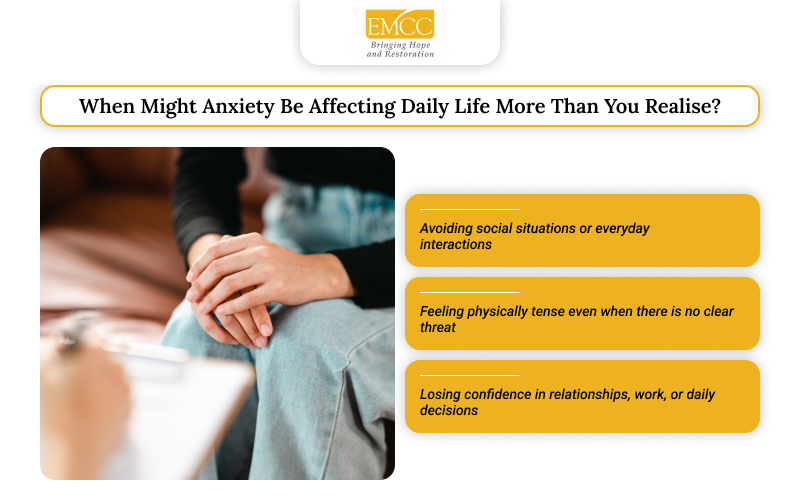
Social anxiety can influence how a person sees themselves. Repeated patterns of overthinking and self-criticism can lower confidence, making it harder to feel comfortable in social settings.
In relationships, this may lead to hesitation in expressing thoughts or feelings. Conversations can feel more forced, and there may be a tendency to withdraw or avoid deeper engagement.
At work, social anxiety can affect participation in meetings, presentations, or everyday interactions with colleagues. This can impact both performance and how opportunities are approached.
Over time, these effects can shape daily life. Activities that involve interaction may feel more demanding, and decisions may be influenced by a desire to minimise discomfort rather than pursue meaningful experiences.
For some individuals, recognising these patterns can be the point where they begin to look more closely at what has been happening, rather than continuing to push through the discomfort.
Counselling can provide a structured but open environment where experiences are explored without pressure or judgement, and in Singapore, this often helps individuals recognise patterns more clearly, especially when anxiety has been building gradually over time.
When It Might Be More Than Just Overthinking
There are times when social anxiety moves beyond occasional overthinking. Persistent patterns, such as constant rumination, physical symptoms, and ongoing avoidance, may indicate a deeper level of anxiety.
These patterns often develop gradually. What begins as mild discomfort can become more noticeable as it affects multiple areas of life.
Recognising these signs is an important step. It allows for a clearer understanding of what is happening and opens the possibility for support and change. When these patterns become more consistent or harder to manage on your own, some people find that counselling can help bring greater clarity around their anxiety, and in Singapore, this is often approached in a structured and gradual way.
When to Consider Speaking to Someone About Anxiety
There is no single point at which support becomes necessary, but certain signs can indicate that it may be helpful to speak to someone. These include ongoing distress, difficulty managing thoughts, or a noticeable impact on daily life.
For some individuals, having a space to talk things through can make it easier to understand what is happening beneath the surface. Therapy for anxiety may be considered when these patterns continue over time, and in Singapore, this support is often guided by trained professionals who look at how thoughts, behaviours, and physical responses interact.
Counselling can also provide a structured but safe environment where experiences are explored without pressure or judgement. In Singapore, this may help individuals recognise patterns more clearly, especially when anxiety has been building gradually.
Where more focused support is needed, counselling may be arranged individually for adults who prefer a one-to-one setting. This allows the pace and direction of support to be shaped around the person’s concerns, with decisions made collaboratively based on what feels appropriate and manageable.
The aim of speaking with someone is to gain a clearer understanding of your experiences and how to respond to them more groundedly.
You Don’t Have to Wait Until It Becomes Overwhelming
Social anxiety often develops over time, which means it can also be addressed early. Seeking support does not require reaching a crisis point. In many cases, early awareness and small adjustments can make a meaningful difference.
Understanding these patterns is a starting point. It allows individuals to recognise that their experiences are not uncommon and that there are ways to respond differently.
If social anxiety has begun to affect how you think, feel, or interact with others, speaking to a professional can provide clarity and direction. With the right support, it becomes possible to reduce overthinking, manage physical responses, and approach social situations with greater confidence and ease.
Reach out to Eagles Mediation & Counselling Centre to speak with a professional and take the next step towards understanding your anxiety in a structured, supportive way.