
|

|
Training & Education
|
Supporting Traumatised Children Through a Salutogenic Trauma-Informed Lens

Supporting Traumatised Children Through a Salutogenic Trauma-Informed Lens
Do You Work with Children Whose Pain Is Too Often Misread as “Bad Behaviour”?
Children who have experienced trauma do not simply “misbehave”. They survive.
Their behaviours often reflect the state and history of their nervous system, shaped by fear, instability, loss, neglect, violence, disrupted attachment, and the environments they have had to adapt to. For clinicians, child welfare workers, school counsellors, case workers, youth mentors, educators, and helping professionals, this work can be deeply challenging. A child’s aggression may be a fight response, silence could stem from dissociation. Compliance may be shutdown, while refusal may be self-protection. When adults and systems misread these responses as manipulation, defiance, or non-compliance, children can be unintentionally re-traumatised by the very systems meant to protect them.
Supporting Traumatised Children Through a Salutogenic Trauma-Informed Lens, presented by Dr Robert Rhoton, PsyD, LPC, F.A.A.E.T.S., is a one-day workshop designed to equip professionals with the knowledge, relational skills, and systemic frameworks needed to respond to traumatised children without pathologising them.
This training guides participants to understand behaviour as communication, regulation as foundational, and safety as the necessary starting point for meaningful intervention.
Drawing from neurodevelopmental trauma, salutogenic principles, co-regulation, case-based learning, and workforce resilience, the workshop helps participants shift from compliance-focused responses toward approaches that strengthen hope, coherence, and resilience across the child’s support network.
Through practical teaching, reflective prompts, case vignettes, and skill practice, participants will learn to recognise the survival logic behind children’s behaviours, reduce fragmentation across systems, support caregiver and professional attunement, and respond in ways that build safety rather than shame.
REGISTER HERE
Clear Learning Objectives Tailored for Child Trauma Work
- By the end of this training, participants will be able to:
- Describe how neurodevelopmental trauma shapes behaviour, regulation, attention, memory, executive function, and relational patterns.
- Identify significant systemic challenges that interfere with effective care for traumatised children.
- Apply salutogenic principles to assessment, engagement, and intervention.
- Use attuned responses that promote co-regulation, felt safety, and relational stability.
- Collaborate across disciplines to reduce fragmentation and increase coherence for the child’s story.
- Identify strategies to prevent re-traumatisation within child welfare, school, counselling, and service workflows.
- Strengthen their own resilience and reduce compassion fatigue, moral distress, and emotional exhaustion.
Key Areas Covered in This One-Day Workshop
- Understanding Neurodevelopmental Trauma: Participants will learn how trauma shapes the developing brain and nervous system, and why hyperarousal, hypoarousal, dissociation, aggression, impulsivity, shutdown, and compliance may reflect biologically correct survival responses rather than wilful misbehaviour.
- The Ten System-Level Challenges: The workshop examines key barriers that can interfere with effective care, including limited understanding of neurodevelopmental trauma, fragmented services, deficit-based assessment, lack of attuned adult relationships, punitive discipline, overwhelmed caregivers and providers, inadequate training in dissociation, insufficient collaboration with families, cultural blind spots, and short-term interventions for long-term trauma.
- Practical Application Through a Salutogenic Lens: Participants will explore the core salutogenic principles of comprehensibility, manageability, and meaningfulness, and learn how these can guide engagement, assessment, intervention, and cross-system collaboration.
- Case Vignettes and Skill Practice: Through case examples involving dissociation, domestic violence exposure, placement disruption, conflicting service narratives, hyperarousal, and punitive responses, participants will practise identifying survival logic, mapping system challenges, applying salutogenic triage, and creating simple intervention plans.
- Workforce Resilience and Hope-Based Practice: The workshop closes with a focus on the professional’s own regulation, resilience, hope, and sustainability. Participants will consider how moral distress, compassion fatigue, and emotional exhaustion affect the quality of care, and why hope is not a vague ideal but a professional competency.
Powerful Benefits for Professionals Supporting Traumatised Children:
- A Clearer Trauma Lens
Understand children’s behaviours through the language of survival, nervous system protection, and developmental adaptation.Greater Confidence with Difficult Presentations
Respond more effectively to aggression, shutdown, dissociation, withdrawal, impulsivity, refusal, and apparent non-compliance.Stronger Co-Regulation Skills
Learn why children cannot regulate beyond the adults and environments around them, and how your own presence becomes a primary intervention tool.Reduced Blame and Pathologising
Move from “What is wrong with this child?” toward “What is this child’s nervous system trying to protect them from?”More Coherent Cross-System Support
Learn how to reduce fragmentation between families, schools, child welfare systems, clinicians, case workers, and other helping professionals.More Compassionate Documentation and Formulation
Shift from deficit-heavy language toward asset-focused, salutogenic understanding that preserves dignity and supports intervention.Better Support for Families and Caregivers
Recognise caregiver trauma and capacity, engage stressed parents without condemnation, and strengthen families as part of the intervention.Greater Sustainability
Understand moral distress, emotional exhaustion, and compassion fatigue, while strengthening the resilience needed to remain attuned and effective in this work.
What You Will Receive at the End of This Training:
- Access to ongoing weekly mentoring with Dr Robert Rhoton to support the practical application of skills learnt during the training.
- A certificate of attendance from EMCC and the Arizona Trauma Institute (ATI).
- Participants may clock the 7 training hours as part of their Counselling Professional Development (CPD) hours.
- 1 soft-copy workshop manual.
Who Should Attend:
- Child welfare workers
- Child protection professionals
- Case workers and case managers
- Counsellors
- Therapists
- Clinicians
- Social workers
- School counsellors
- Youth workers
- Youth mentors
- Educators working with children affected by trauma
- Behavioural health professionals
- Family service professionals
- Supervisors and programme leads in child, youth, and family services
- Allied professionals supporting traumatised children and their families
Enrol Now – Strengthen the Way You Support Traumatised Children
Children shaped by trauma need more than compliance demands, behavioural correction, or fragmented service responses. They need adults and systems that can understand their survival responses, create safety, support regulation, preserve dignity, and build coherence around their story.
This one-day workshop equips professionals with a practical, compassionate, and biologically grounded lens for supporting traumatised children across clinical, school, child welfare, youth, and community settings.
Take this step to strengthen your ability to respond with clarity, attunement, and hope.
Disclaimer:
Materials in this course may include interventions and modalities that are beyond the authorised scope of expertise or licence of the training participant. As a licensed professional or helping professional, you are responsible for reviewing your scope of practice, including activities that may be defined in law as beyond the boundaries of practice, in accordance with and in compliance with your profession’s standards.
Additionally, many of the topics being taught may require supervision and/or mentorship, which is not included in this course.
Registration and Fees
Supporting Traumatised Children Through a Salutogenic Trauma-Informed Lens
Public Service Agencies + *Former Training Participants: $350
Early Bird: $400 (Until 31 July 2026)
Standard: $450
*Applicable for all past participants who have attended a training programme with EMCC previously.
Bundle Option
Participants may also register for Supporting Traumatised Children Through a Salutogenic Trauma-Informed Lens together with Certified Clinical Trauma Specialist for Family (CCTS-F) and enjoy 15% off the combined fee.
Supporting Traumatised Children + CCTS-Family Bundle
Public Service Agencies + *Former Training Participants: $1,147.50
Early Bird: $1,275
Standard: $1,402.50
*Applicable for all past participants who have attended a training programme with EMCC previously.
Registration is on a first come, first served basis, and confirmed only after full payment has been received. After receipt of payment, a registration confirmation email will be sent. If no payment is received, the registration is considered null.
For enquiries, please email training@emcc.org.sg
Cancellations and Refund policy
- Registration and Payment
- Registration is on a first come, first served basis, and confirmed only after full payment has been received. After receipt of payment, a registration confirmation email will be sent. If no payment is received, the registration is considered null.
- Cancellation by Participant
- In the event of unexpected circumstances such as illnesses and/or emergencies, EMCC may, at its full discretion, consider providing a partial refund upon the production of a medical certificate or other supporting documents as may be deemed necessary. Otherwise, no refund will be given for any cancellations.
- Cancellation by Organiser
- The organiser reserves the right, at its sole and absolute discretion, to cancel the event without notice or reasons, and participants will be entitled to a full refund of the registration fee.
- Limitation of Liability: The organisation shall not be liable for any additional costs, expenses, or losses incurred by participants.
- Substitute Attendance
- In the event a registered participant is unable to attend, they may nominate a substitute, such as a colleague, to attend in their place.
- The substitute must meet the eligibility criteria for participation in the event, as determined by the organiser.
- The organiser must receive notification of the substitution at least seven (7) days prior to the workshop/training.
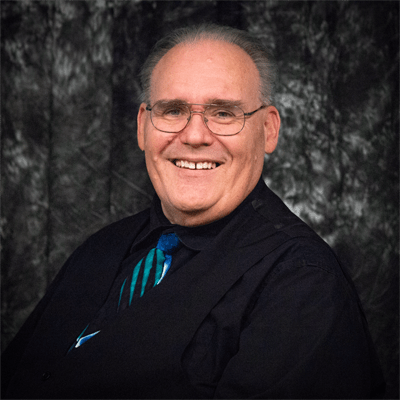
Dr Robert Rhoton LPC, PsyD; F.A.A.E.T.S.
Dr. Robert Rhoton, CEO of Arizona Trauma Institute possesses a rich history of experience in the mental health field. Dr. Rhoton has supervised multiple outpatient clinics, juvenile justice programs, and intensive outpatient substance abuse programs for adolescents, day treatment programs for youth and children, adult offender programs and child and family therapeutic services. Additionally, Dr. Rhoton has advanced training in child and adolescent trauma treatment, family therapy, and family trauma. Dr. Rhoton served as president of the Arizona Trauma Therapy Network from 2010 through 2012.
Dr. Rhoton was a Professor at Ottawa University for 20 years in the Behavioral Sciences and Counseling Department whose primary interests were training counselors to work with traumagenic family dynamics, child and family trauma, and Salutogenic approaches to treatment. Dr. Rhoton is a Fellow of the Academy of Experts in Traumatic Stress and collaborates and consults with numerous organizations throughout the United States, Canada, South America, UK, Saudi Arabia, Pakistan, Singapore, Hong Kong and Iran increasing their understanding of trauma and the impact of developmental trauma on the individual and family.
Dr. Rhotons Published work includes:
- Trauma Competency: An Active Ingredients Approach to Treating Posttraumatic Stress Disorder
- Journal of Counseling and Development, July 2017
- Gentry, J. E., Baranowsky, A. B. and Rhoton, R. (2017), Trauma Competency: An Active Ingredients Approach to Treating Posttraumatic Stress Disorder. Journal of Counseling & Development, 95: 279–287.
- Rhoton, Aubrey & Gentry (2017) Transformative Care
- Rhoton, Aubrey & Gentry (2019) Transformative Care, 2nd Edition
- Rhoton & Logan (2020) Trauma-informed Organization: The Journey to Becoming an Ascending Leader
- Rhoton & Gentry (2021) Trauma Competency in the 21st Century: A Salutogenic Active Ingredients Approach
- The Science of Trauma and Recovery: Integrating a Salutogenic Approach to Treatment (2022)
- Resilience and Empowerment After Trauma: Science-Based Recovery Skills (DurableHearts Publishing, 2024)
- Trauma and Inflammation (in press)
- Unraveling the Shadows: Understanding Complex Trauma (in press)